


text Cecilia Berardi



The history of Dubai
We discover the historical evolution of the Emirati city
Long before the era of artificial island sand fully automated metro systems, when world records were still waiting to be broken, Qassimi ships navigated the waters of the Arabian Gulf to trade pearls and fish. The land was alive with Bedouins, merchants, caravans, and fleets of explorers.
But in 1966, everything suddenly changed: Dubai struck oil, a discovery that ignited a transformation forever altering the region’s landscape.
 Sheikh Zayed Road skyscrapers (ph. Len Chapman)
The oil revenues, along with the resulting population surge and the push for economic diversification, set the stage for Dubai’s extraordinary development. Small trading postsevolved into dynamic ports and thriving commercial hubs. As highways and airports became integral to the city’s infrastructure, the early 1980s marked a turning point with the launch of Emirates Airlines, opening Dubai to global connectivity. Nevertheless, at that time, Dubai still appeared as stretches of desert and sky overlooking the sea. With few urban agglomerations and pristine beaches, the city relied on the area around the Creek as a central hub for trade and commerce.
Wooden dhows sailed the surrounding waters, reflecting the city’s deep connection to its maritime past. The main roads, including the now-famous Sheikh Zayed Road, were paved and expanding but still surrounded by vast stretches of desert. The road itself was much quieter than today, with only a few significant buildings dotting its sides, such as the World Trade Centre, which at the time stood as one of the tallest buildings in the region.
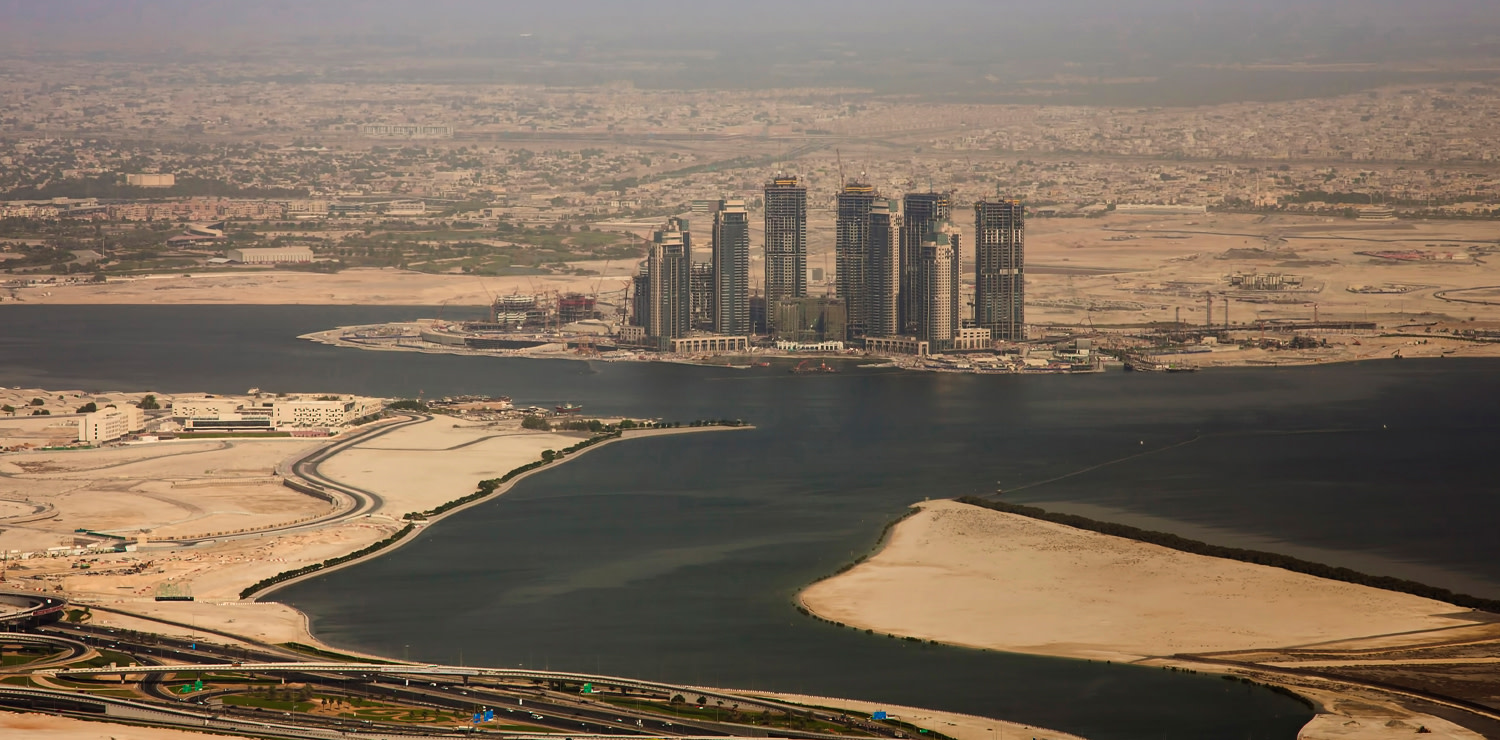
 Cayan Tower under construction
Camel caravan scould still be seen in the desert outskirts, and while the contrast between modernity and tradition was evident, the city was slowly beginning to embrace its leaders’ vision for rapid development. It was only in the 1990s that the city’s skyline began to take shape. Sheikh Zayed Road became a major artery for the emirate’s growth, and a new wave of high-rise buildings joined the tallest and most recognizable structures. The development of Jebel Ali Port and the surrounding free zone became key economic drivers, attracting international businesses and investors.
This shift was part of a broader strategy to turn Dubai into a global commercial center. As a result, new office buildings, luxury hotels, and residential complexes started to appear.Dubai was gradually stepping into modernity, engineering ambitions weret aking shape, and the journey toward iconic status and technological advancement was set in motion. The era of luxury began.
The opening of the Burj Al Arab in 1999, with itssail-shaped design, marked the city’s bold entry into the world of tourism. The iconic hotel became a symbol of Dubai’s aspirations to be a refined global destination and a key player in the international tourism scene. New shopping malls, such as the Deira City Centre, emerged, and on the horizon, the artificial island of Palm Jumeirah began to take form.
Overall, the 1990s marked a pivotal period for Dubai, laying the foundations for the explosive growth that would follow in the 2000s. As Dubai faced the new millennium, it emerged as an unstoppable force of innovation and growth, ready to redefine urban living and set new global standards. The Atlantis, The Palm resort on Palm Jumeirah symbolised Dubai’s commitment to luxury and innovation.
The city also saw the emergence of other striking skyscraper sand neighbourhoods, such as the Emirates Towers and Dubai Marina, contributing to a breathtaking skyline. The city’s infrastructure expanded rapidly, with significant investments in transportation systems. The Dubai Metro, which began operation in 2009, revolutionized public transport while the giant Dubai Mall, featuring its aquarium and ice rink, quickly became a major attraction for global brands.
In this vibrant atmosphere, galleries, desert adventures, and golf clubs flourished. Dubai had taken on its aura as an exotic destination, a land of promising opportunities and a future haven of prosperity. The world watched in disbelief at the miracle of the desert. Certainly, some skepticism about the sustainability of Dubai’s growth lingered during those years. Yet there came a moment when every doubt was swept away.
 An overhead view of the city in the 1990s
No place in the world had reached those heights; no city had dared so much. The construction of the Burj Khalifa represented a testament to the tireless pursuit of excellence. “Burj Khalifa: Dubai’s Bold Leap into the Skies!” and “The Rise of a Legend: Burj Khalifa Construction Commences” are just a couple of headlines that captured the excitement as the world welcomed this new record-setting marvel. At that time, the emirate had already embarked on a journey of ambitious projects that further exemplified its innovative spirit, such as The World Islands, a breath taking example of creativity, and the Frame, which connects the city’s rich heritage with its futuristic aspirations.
Today, Dubai has not only cemented its status as a global architectural power house but also continued to redefine innovation and luxury, embodying progress, and inspiring others to reach for greatness.